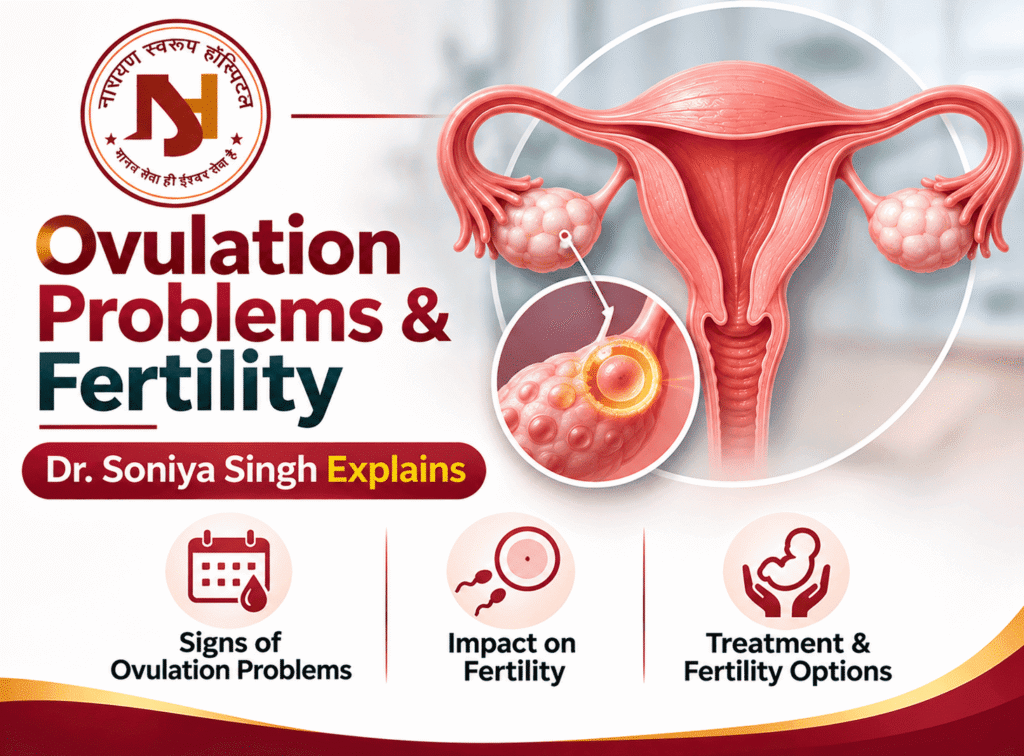

Ovulation Problems & Fertility: Dr. Soniya Singh Explains
When pregnancy does not happen as expected, some people start counting cycle days more carefully. An app may predict an ovulation date, yet the next period arrives earlier or much later than planned. These changes can be confusing, especially when online advice treats every menstrual cycle as identical.
The connection between ovulation problems and fertility is important, but ovulation is only one part of conception. A healthy pregnancy also depends on sperm, fallopian tubes, the uterus and several other factors. Understanding what irregular ovulation may look like can help patients seek useful evaluation without blaming themselves or taking unprescribed medicines.
What Happens During Ovulation?
Ovulation is the release of an egg from an ovary. It usually occurs once during an ovulatory menstrual cycle, but the exact day varies. After release, the egg is available for fertilization for a limited time. Sperm can survive in the reproductive tract for several days, so the fertile window begins before ovulation itself.
A cycle length of 28 days is an example, not a universal standard. Many healthy people have cycles that are shorter or longer. A regular pattern can suggest ovulation is occurring, but it does not prove it in every case. Conversely, one delayed period does not automatically mean a chronic fertility disorder.
What Signs May Suggest Irregular Ovulation?
Some people notice no obvious symptoms. Others report cycles that vary substantially, periods that arrive very infrequently, or months without menstrual bleeding. Changes in bleeding, acne, excess facial hair or weight may sometimes accompany hormonal conditions.
Possible reasons for irregular ovulation include polycystic ovary syndrome (PCOS), thyroid disorders, elevated prolactin, significant changes in weight, intense exercise or other health factors. Age-related changes in ovarian function may also be relevant.
These signs need careful interpretation. A menstrual tracking app cannot diagnose PCOS, and acne by itself does not prove ovulation is absent. Patients should discuss persistent patterns with a clinician rather than assigning a diagnosis based on one symptom.
Can You Ovulate With Irregular Periods?
Yes. Some people with irregular periods still ovulate, but predicting the timing can be difficult. Ovulation may also be absent in some cycles. A doctor can assess whether the pattern suggests a need for testing.
Home ovulation predictor kits detect a rise in luteinizing hormone (LH), which often occurs before ovulation. However, an LH result does not guarantee that an egg was released, and results may be harder to interpret with some conditions such as PCOS. Basal body temperature patterns can suggest that ovulation occurred after the event, but they are less useful for predicting the exact day in advance.
If tracking becomes stressful or confusing, it may be more productive to discuss the full menstrual history with a healthcare professional rather than buying several different devices.
What Fertility Tests for Women May Be Recommended?
An evaluation usually begins with questions about menstrual history, how long pregnancy has been attempted, previous pregnancies, medicines and symptoms. The clinician may assess both partners because fertility difficulties are not always related to ovulation.
Depending on the history, tests may include:
- Progesterone testing: Can help assess whether ovulation has occurred when timed appropriately.
- Thyroid or prolactin tests: Considered if symptoms suggest hormonal problems.
- Other hormone tests: Selected according to age, symptoms and cycle history.
- Pelvic ultrasound: May assess ovaries and uterine structures.
- Tubal assessment: May be considered when blockage or other factors are suspected.
- Semen analysis: An important part of evaluating a couple when appropriate.
Not everyone needs all these tests. The timing and interpretation of hormone measurements matter, and a single test should not be used in isolation to label someone infertile.
When Should You Consult a Fertility Specialist?
For many couples where the woman is younger than 35, evaluation is commonly recommended after 12 months of regular unprotected intercourse without pregnancy. For women aged 35 or older, assessment is generally advised after six months; those over 40 should discuss evaluation without delay.
Seek advice sooner if periods are absent or consistently very irregular, known reproductive conditions exist, or there are other clear risk factors. These are general clinical thresholds, not a reason to postpone help when symptoms need attention.
For a broader discussion of both partners and possible causes, read Infertility: Common Causes, Evaluation and When Couples Should Consult a Specialist. This article focuses specifically on ovulation and how it is assessed.
Can Lifestyle Changes Restore Ovulation?
Lifestyle may influence reproductive health, especially when sleep, nutrition, smoking, alcohol use, intense exercise or significant weight changes are involved. However, there is no single diet, supplement or exercise plan that corrects every ovulation problem.
Treatment depends on the diagnosis. Some patients benefit from management of thyroid disease or PCOS; others may need medicines to help induce ovulation under medical supervision. These medicines require appropriate monitoring and are not safe to start based on online recommendations. The clinician should also consider other fertility factors before choosing a treatment plan.
What Should You Bring to a Consultation?
Bring menstrual dates for the past several months if available, previous ultrasound or blood test reports, details of medications and any past pregnancies. Mention pelvic pain, unusual discharge, changes in weight and other symptoms openly.
Useful questions include: Do my cycles suggest irregular ovulation? Which tests would actually change the plan? Should my partner be tested? When should we review the results? Asking focused questions helps avoid unnecessary repeat testing.
Fertility Consultation in Prayagraj
The official hospital profile lists Dr. Soniya Singh as an obstetrician, gynaecologist and infertility specialist. If you are seeking fertility advice in Prayagraj, a consultation can help determine whether ovulation or another factor needs evaluation. Confirm available services and appointment details directly with Narayan Swaroop Hospital.
Frequently Asked Questions
Does an irregular period always mean infertility?
No. Irregular periods may signal a need for assessment, but they do not establish that pregnancy is impossible.
Can an ovulation kit confirm egg release?
Not always. It detects an LH rise, which does not guarantee ovulation occurred.
Should both partners be evaluated?
Often yes. Fertility difficulties can involve male, female or combined factors.
Conclusion
Ovulation is important for conception, but cycle timing alone cannot explain every fertility concern. Tracking patterns, seeking evaluation at the appropriate time and choosing tests based on medical history provide a more reliable route to answers than self-diagnosis or unmonitored medication.
Our Recent Blogs
- Infertility: Common Causes, Evaluation and When Couples Should Consult a Specialist
- Meet Dr. Soniya Singh: Women’s Healthcare and Gynecology
Hospital Location: Narayan Swaroop Hospital on Google Maps
Medical References: ACOG: Evaluating Infertility | NHS: Infertility Diagnosis
Medical disclaimer: Educational information only. The title is an editorial format and is not a claim of direct authorship or medical approval by Dr. Soniya Singh. Clinical review is required.