

Fever with headaches, body aches, fatigue, or abdominal discomfort may have multiple reasons. In case you need a general physician in Prayagraj, you need to know that dengue fever, typhoid, and viral fever have very similar symptoms which make it hard to establish the underlying cause basing on the symptoms alone.
The symptoms of dengue fever include fever, headaches, pain behind the eyes, muscle and joint pain, nausea, vomiting, and rash. The symptoms of typhoid include fever, fatigue, headaches, abdominal discomfort, and changes in bowel habits. The symptoms of viral infection include fever, fatigue, cough, sore throat, and body aches. Since the symptoms are so alike, the medical evaluation will help you identify the disease.
In case of persistent fever, unusual severity, and worsening of the condition, visiting a general physician in Prayagraj will help you identify whether there is a need to undergo further diagnostics.
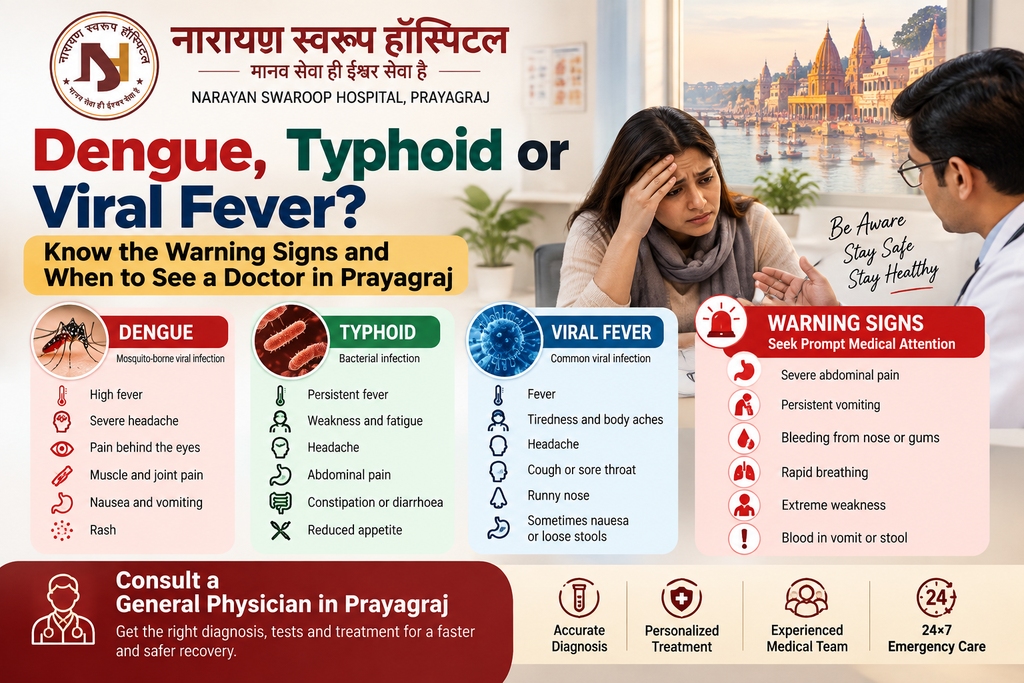
Dengue, Typhoid and Viral Fever: What Is the Difference?
Although these conditions can all cause fever, their causes and clinical patterns are different.
| Condition | Main cause | Common symptoms | What needs attention |
|---|---|---|---|
| Dengue | Dengue virus transmitted by infected mosquitoes | High fever, headache, pain behind the eyes, muscle/joint pain, nausea, vomiting, rash | Warning signs may appear as fever settles |
| Typhoid | Salmonella Typhi bacteria | Persistent fever, weakness, headache, abdominal pain, constipation or diarrhoea, reduced appetite | Untreated infection can become serious |
| Viral fever | Several different viruses | Fever, tiredness, body aches, headache, cough or other respiratory symptoms depending on the virus | Persistent or severe symptoms require medical assessment |
It is important to note that symptoms themselves cannot reliably differentiate between typhoid and other conditions. The CDC has noted that there are very few reliable indicators which differentiate between typhoid and various other infectious illnesses. CDC
What Does Dengue Usually Feel Like?
Dengue usually starts with a fever, followed by a severe headache, pain behind the eyes, joint or muscle pain, nausea, vomiting and rashes. Symptoms usually last for a number of days, and most people fully recover, however, some people get into the case of severe dengue. WHO
One important thing to remember is that the reduction of the fever does not necessarily mean that everything will be alright. Signs of the severe dengue can appear during the period when the fever is going down. Iris
What Are Common Symptoms of Typhoid?
Typhoid fever is caused by Salmonella Typhi. Symptoms usually include a fever, weakness, headache, abdominal pain, constipation or diarrhea, cough and loss of appetite. Sometimes a rash appears, consisting of flat rose-coloured spots.
The fact that untreated typhoid is capable of causing many complications means that fever should not be regarded as an ordinary viral illness.
What About Viral Fever?
“Viral fever” is a general name and not that of any particular disease. Several types of viruses might give rise to fever accompanied by other symptoms such as fatigue, headaches, muscle pains, coughing, sore throat, running nose, or gastrointestinal symptoms.
The cause might not always be obvious from the symptoms alone. A medical practitioner would take into account various factors such as the period of fever, associated symptoms, clinical findings, etc.
Warning Signs That Need Prompt Medical Attention
There are some symptoms which cannot be overlooked especially when dengue is suspected.
Immediate medical attention should be sought if a fever patient shows any of the following:
- Severe abdominal pain or tenderness
- Persistent or recurrent vomiting
- Bleeding from the nose or gums
- Blood in vomit or stool
- Marked weakness, irritability or abnormal lethargy
- Difficulty breathing
- Pale or cool skin
- Profound difficulty in maintaining consciousness or normal function
These are particularly significant danger signs in severe dengue. In addition, severe dengue can develop quickly and might require hospitalization. CDC
Typhoid may also lead to very serious complications such as gastrointestinal bleeding or intestinal perforation especially in the case of long-lasting disease. CDC
Do not hesitate to consult a physician in case of worsening condition regardless of the fact that the fever is still not very high.
When Should You See a General Physician in Prayagraj?
Consider consulting a general physician doctor near me when:
- Fever persists or keeps returning.
- You feel significantly weaker than expected.
- Fever is accompanied by persistent vomiting or abdominal symptoms.
- You develop a rash or unusual bleeding.
- You have symptoms suggestive of dengue during an area or season when dengue transmission is a concern.
- You have significant dehydration, difficulty eating or drinking, or worsening weakness.
- Symptoms are not improving as expected.
The general physician can look at the entire clinical case, instead of just one symptom.
In Narayan Swaroop Hospital, the department of General Medicine is concerned with diagnosing and non-surgical management of diseases of internal organs.
What Tests May Be Needed?
It depends upon the symptoms of the patient, fever and clinical assessment.
For suspected dengue, blood tests can help diagnose the disease, but the doctor can make initial decisions regarding management on basis of symptoms and clinical assessment. CDC
For suspected typhoid, the doctor might recommend necessary investigations according to the clinical scenario. It is always best not to make interpretations of a test on your own.
Narayan Swaroop Hospital’s laboratory runs 24×7 and offers investigations in haematology, clinical pathology, serology, microbiology, immunology and molecular microbiology.
Why You Should Not Self-Medicate for Persistent Fever
One wrong notion is that all fevers are due to viruses and hence medications should be started without proper medical assessment.
The proper treatment is based on the cause. Typhoid is a bacterial infection, which may need antibiotic treatment, while there is no specific treatment for the virus causing dengue infection. CDC
Thus, antibiotic medication cannot be started just because fever has lasted for several days and also medications should not be discontinued without proper medical advice.
In case you suspect dengue fever, then discuss pain relief or fever medications with your doctor as some medicines such as aspirin and ibuprofen may increase the risk of bleeding. World Health Organization
How Can You Reduce the Risk?
For prevention of dengue fever, avoidance of exposure to mosquitoes and removal of stagnant water in and around the house and workplace will be helpful. There may be activity of dengue mosquitoes during daytime, especially in early morning and evening times. World Health Organization
For prevention of typhoid fever, access to clean drinking water and proper cooking of food are important preventative steps.
In times when there is increased occurrence of fever and mosquito-borne diseases in Prayagraj, it may be better to focus on symptoms rather than try to diagnose the disease based on symptoms.
Key Takeaways
- Fever may occur due to dengue, typhoid, and many viral infections, but the causative factors vary.
- Fever may not be reliably identified based on symptoms only.
- Symptoms related to dengue can be experienced during the period when fever starts to abate.
- Fever that persists or worsens needs to be assessed by a doctor.
- Intense stomach pains, persistent vomiting, bleeding, fast breathing, and fatigue need to be taken seriously.
- Tests will be done considering the overall health of the patient.
In case of search for a general physician clinic near me in Prayagraj, do not look up for only your symptoms online.
If symptoms are worsening and/or emergency symptoms are present, seek urgent medical help. Narayan Swaroop Hospital is equipped with an emergency and diagnostics department in Prayagraj.
FAQS
1. Can dengue and viral fever have the same symptoms?
Yes. Fever, headaches, body ache, and fatigue could be seen in many illnesses. Alongside the above-mentioned symptoms, dengue could also present eye pain, nausea, vomiting, rashes, and specific warning signs.
2. How do I tell between dengue and typhoid fever?
Symptoms alone cannot help in confirming either diagnosis, as per your doctor, you could be prescribed relevant tests.
3. When should I visit a general practitioner due to fever?
See your GP when you have fever that is persistent, recurrent, worsening or is associated with any worrying symptoms like vomiting, weakness, pain in abdomen, rashes, or bleeding.
4. Could dengue get worse after the fever subsides?
Yes. Dengue warning signs could arise around the time when fever starts improving, which means that improvement in fever doesn’t always mean complete recovery from the disease.
5. Is typhoid only associated with stomach problems?
No. Typhoid could cause fever, weakness, headaches, abdominal pain, constipation or diarrhea, poor appetite.
6. Should I take antibiotics for every persistent fever?
No. There is no need for you to take antibiotics in case of all fevers as treatment depends on the actual cause.
7. Where can I get fever-related diagnostic tests in Prayagraj?
According to Narayan Swaroop Hospital, their laboratory at the hospital offers various diagnostic investigations round the clock.


