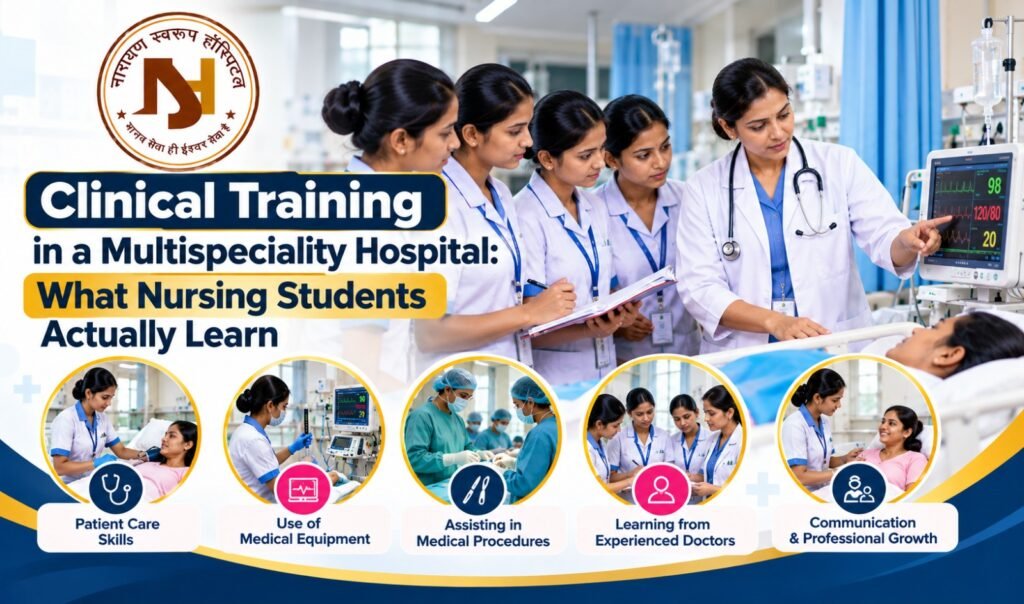

Apart from classroom teaching and study of books, nursing education also includes clinical practice of nursing students who get an opportunity to apply theoretical knowledge in practice under supervision, learn how hospitals work, and acquire professional behavior appropriate for a healthcare environment.
The work that students do may vary depending on their study program, level of proficiency, clinical rotation arrangements, and policies of a particular hospital. It is not about replacing experienced medical personnel but rather about acquiring safe practices, practical skills, and confidence step by step.
Clinical training for nursing students showing supervised learning across hospital departments.
What Is Clinical Training for Nursing Students?
Clinical practice is a well-structured element of nursing practice where the students learn through observation and practice at health care facilities. The process helps them gain knowledge on how nursing theories are implemented in the care of patients.
While undergoing clinical practice in a multi-speciality hospital, the students may be exposed to different departments including the general wards, out-patient department, delivery ward, emergency services among others.
Some common learning domains include:
- Measuring and recording vital signs under supervision
- Adhering to hand washing and infection control techniques
- Interacting in a respectful manner with patients and their families
- Keeping proper nursing documentation
- Understanding medication safety concepts
- Watching patient assessment and planning
- Working with nursing staff and other health professionals
The students should undertake only those activities authorized by the curriculum and their competency levels.
What Do Nursing Students Learn in Different Hospital Departments?
A multispeciality environment will help the student learn how care provision is different in various departments.
1. General Ward Experience
General wards provide students with experience of typical duties of nurses and other healthcare workers and patient care.
The student may see how nurses evaluate patients, measure vital signs, assist with care and inform about the changes in the patient’s state. The reason for this is that good recording and handover of information is crucial if several healthcare providers take care of one patient.
For instance, if the temperature or breathing rhythm of the patient has changed, it is important to inform the nurse in charge immediately without independently treating the patient.
2. Exposure to the Emergency Department
An emergency department provides students with an understanding of how healthcare providers cope with medical emergencies.
Depending on the particular placement, a student can learn how a patient is received, evaluated, prioritised and coordinated by other staff members. It is essential to understand why clear communication and prompt action are crucial if the patient’s condition seems to deteriorate.
Emergency care can be difficult, therefore, students need to follow instructions and respect the confidentiality of patients.
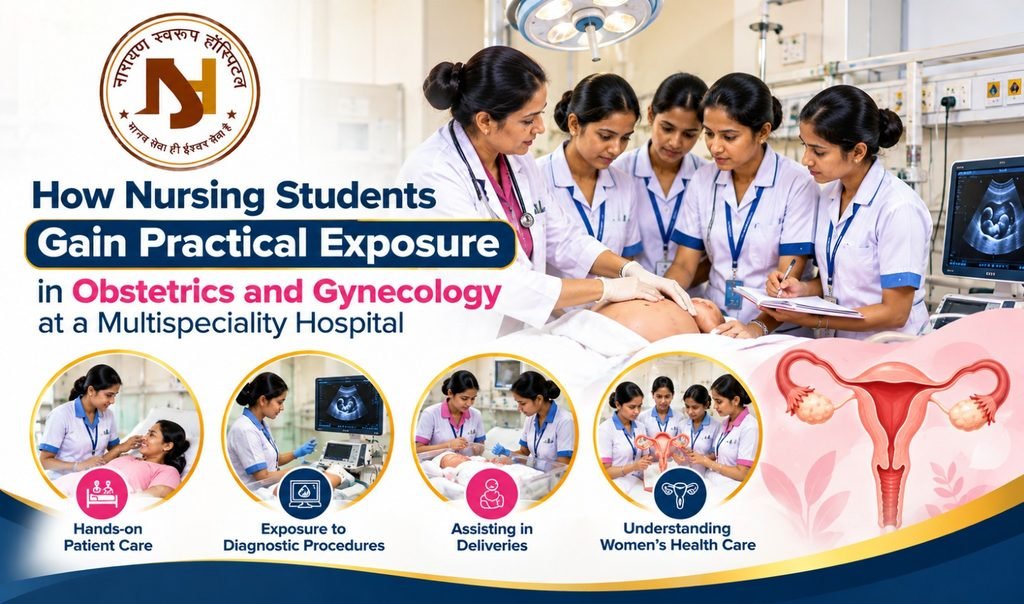
3. Obstetrics and Gynecology
This field teaches about reproductive health, pregnancy, childbirth and post-childbirth services.
Students can be part of the antenatal screening process, maternity ward processes, baby nursing and patients’ education. They can also be taught about respecting the female body during the physical examination process.
It involves recognizing warning signs, maintaining confidentiality and notifying trained professionals of any concern.
4. Operation Theatre and Surgical Care
Operation theatre exposure helps students appreciate the importance of preparation, sterilization and working in a team.
Students can be involved in pre-surgery procedures, patient’s identification, infection prevention, sterilization and post-operation monitoring.
They are made aware of the importance of maintaining sterility, adherence to checklists and accuracy in communication. Observation or participation does not permit the student to conduct surgery or any other restricted procedure.
5. Outpatient and Diagnostic Services
The outpatient service will enable students to comprehend patient registration, the process of consultations, follow-up procedures, and coordination of healthcare services.
If allowed, students can watch how the personnel prepares the patients for investigations, routine instructions, and documentation. Moreover, they can learn how nurses deal with patients who might feel scared or confused about their treatment.
Practical Skills Students Develop During Hospital Training
The practical training for nursing students includes technical knowledge along with communications, observation and professional responsibility.
These include:
- Clinical observation: Identification of alterations in vital signs or behaviors.
- Infection control: Practice of hand hygiene, use of protection equipment and safe handling of medical waste.
- Communication with patients: Effective listening, explaining what kind of activities are allowed and communicating with patients with respect.
- Documentation: Proper documentation of information.
- Team work: Knowing about the roles of nursing professionals and collaborating with doctors and other medical professionals.
- Time management: Understanding how different care activities are planned by the need of the patients and by instructions of the staff members.
These skills are acquired through demonstration, observation, feedback and reflection. It is advised to ask questions in case of uncertainty.
How Does Hospital Experience Improve Career Readiness?
It is important for nursing students to gain a real-world experience in hospitals, to better prepare themselves for the profession.
They will be able to relate what they have learned in their books to the needs of their patients, communicate amid the pressures of working shifts and see why professionalism is needed. They will also get more acquainted with the workings of their shifts, reporting structure and how teamwork plays a key role.
It will aid the students in knowing which areas require additional practice. It will provide them feedback through the clinical educators and authorized supervisors to improve in knowledge and decision making.
But a hospital experience alone does not assure them of getting a job or being a competent professional.
How to Make the Most of Clinical Training
A few practices that nursing students in Prayagraj can employ to ensure effective preparation for their clinical rotations include:
- Revision prior to each clinical rotation: This should focus on the specific anatomy, procedures and safety guidelines.
- Adherence to hospital policy: Students should understand the departmental policies and heed the supervisor’s instructions.
- Maintenance of a learning diary: This should include the skills learned, questions and feedback not revealing patient identification.
- Asking relevant questions: Before participation, students should clear up any confusing task.
- Reflection after each rotation: This involves identification of strengths and further areas requiring more understanding.
- Patient confidentiality: Patient information should never be disclosed without the right authority.
Some of the considerations students can apply when choosing between different nursing programs include availability of clinical rotations, supervision and assessments available within the program. The Narayan Swaroop Nursing College can be considered in this regard, as students can obtain current information from the college.
Frequently Asked Questions
1. At what point is clinical practice introduced in a nursing course?
It differs according to the programme, curriculum and institutional requirements. The student needs to refer to his/her curriculum for this information regarding clinical attachments and assessments.
2. Are nursing students allowed to work alone in hospitals?
No. Nursing students must operate in accordance with their scope of practice and must be supervised in accordance with their training level. Nursing students must not perform clinical procedures independently if they are incompetent and unauthorised to do so.
3. Is multispeciality clinical attachment to a hospital important?
It is potentially beneficial if done well in terms of supervision and learning opportunities. It all depends on how effective it will be.
4. What do nursing students need to carry along during clinical postings?
It varies from institution to institution, but they might need to carry their identification, institutional uniform, notebooks among other things.
5. How can students become proficient in nursing skills?
This is achieved through revision of theory, practicing authorized skills, seeking guidance, taking good notes and adhering to safety guidelines.
Conclusion
The clinical training program allows the nursing students to apply their theoretical education in practical healthcare settings under supervision. Working on wards, in the emergency department, maternity, surgery, and outpatients may provide them with knowledge of patient safety, communication, documentation, and teamwork.
It seems that the best clinical experience that nursing students can have is a good combination of teaching, proper supervision, and willingness to learn, provided that they follow the rules of the hospitals.
Our Recent Blogs
Explore our recent articles on surgical treatment, fertility and pregnancy care:
- General Surgery vs Laparoscopic Surgery: What Patients Should Know Before Treatment
- Infertility: Common Causes, Evaluation and When Couples Should Consult a Specialist
- High-Risk Pregnancy Care in Prayagraj: What Expecting Mothers Should Know
Planning a visit? Find us on Google Maps for our location, directions and contact details.


