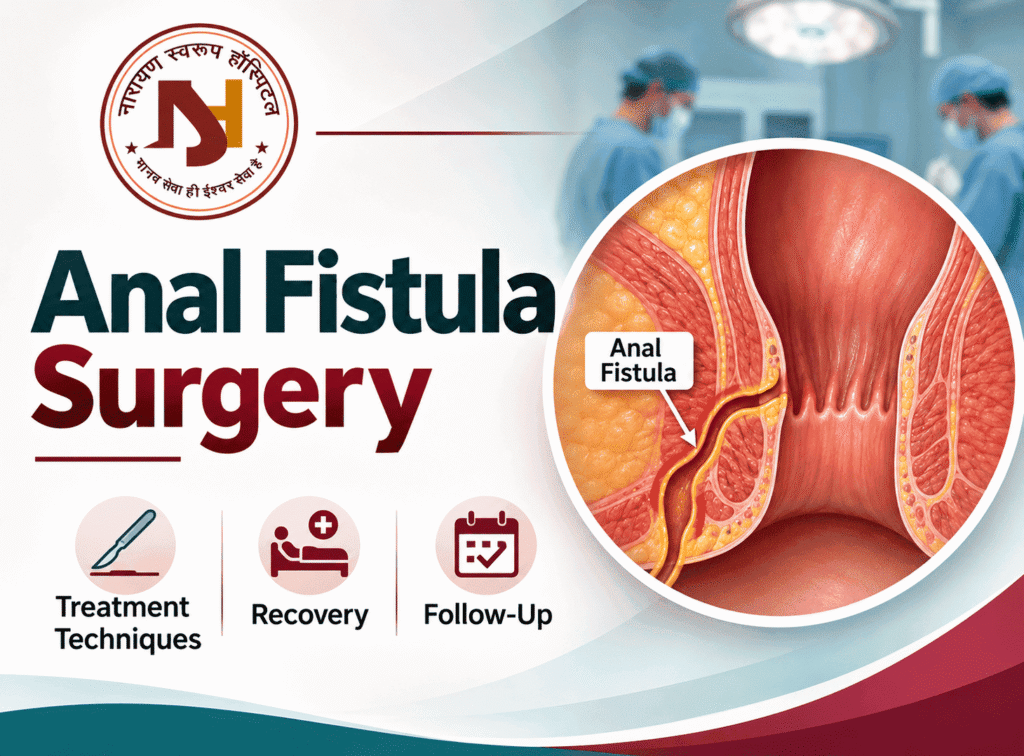

Anal Fistula Surgery: Treatment Techniques, Recovery and Follow-Up
An anal fistula can cause repeated swelling, discharge and discomfort near the anus. It often develops after an infection creates an abscess, leaving a small tunnel between the anal canal and nearby skin. Many people try to manage the discharge with dressings or medicines, but the underlying tract usually needs specialist assessment. Understanding fistula surgery recovery begins before the operation: the surgeon must identify the path of the tunnel and its relationship to the muscles that control bowel movements. That anatomy influences both treatment and long-term continence safety.
Why Does an Anal Fistula Form?
Glands inside the anal canal can become infected, producing a collection of pus called an abscess. After an abscess drains, naturally or through treatment, a persistent connection may remain. Some patients have repeated episodes of pain and swelling before a fistula is identified. Crohn’s disease and certain other conditions can also be associated with fistulas. A visible opening or discharge does not reveal the complete route of the tract. That is why self-diagnosis is unreliable and why a clinician may recommend imaging or examination under anaesthesia.
What Symptoms Should Be Evaluated?
Common signs include intermittent pus or fluid on underwear, a small opening in skin near the anus, irritation and throbbing pain. Swelling may increase when the external opening closes temporarily. Fever, increasing redness and severe pain can signal an abscess and should prompt urgent attention. Some people notice blood mixed with discharge. These symptoms overlap with other anorectal diseases, so an examination is important. Do not squeeze a swelling or apply harsh substances to the area in an attempt to drain it yourself.
How Is the Fistula Tract Mapped?
The clinician asks about earlier abscesses, drainage procedures, bowel symptoms and prior operations. A gentle physical examination may find an external opening. Depending on complexity, an MRI scan or another specialist imaging study can show branching tracts and surrounding structures. Examination under anaesthesia may also be needed to define the tract accurately. Identifying whether the tunnel passes through substantial sphincter muscle is essential, because cutting that muscle can affect bowel control. Planning should therefore prioritise both healing and preservation of continence, not merely closing the visible opening.
What Are the Main Treatment Techniques?
Fistulotomy opens an appropriate low or simple tract so it can heal gradually. Seton placement uses a surgical thread to maintain drainage or support staged treatment, particularly when muscle preservation is important. Advancement-flap or other sphincter-sparing procedures may be considered for selected complex fistulas. Other techniques are available, but outcomes differ and no single method is best for every fistula. The surgeon should explain whether the plan is one-stage or staged, the expected healing period and the chance that further treatment will be required. Crohn’s-associated fistulas may need coordinated medical and surgical care.
What Happens During Early Recovery?
Recovery differs by operation. Some patients have an open wound that heals gradually; others go home with a seton or a specific dressing plan. Mild drainage may be expected, but the treating team should describe the amount and duration that are normal for the procedure. Follow advice on keeping the area clean, changing dressings and maintaining bowel movements without straining. Pain medicines or stool-softening treatment may be prescribed. Do not remove a seton or alter the wound care routine independently. If your instructions are unclear, contact the surgical team rather than relying on online photographs.
When Should You Contact the Surgeon?
Worsening pain, fever, spreading redness, heavy bleeding or increasing swelling needs prompt review. A sudden loss of drainage together with pain may also be concerning if an abscess is forming. Difficulty passing urine or stool after an operation should be reported. Healing does not always follow a straight line, and minor discharge can persist during recovery; however, the team needs to know if symptoms increase. Keep scheduled follow-up visits even when discomfort improves, because the surgeon may need to confirm that the tract is closing appropriately.
Can a Fistula Return After Surgery?
Recurrence is possible, especially with complex or branching tracts, underlying bowel disease or persistent infection. Choosing an overly aggressive procedure can create continence risks, while a more conservative approach may require stages. The best treatment balances those competing considerations. Ask how the surgeon defines successful healing, whether further imaging may be useful and what symptoms should prompt a reassessment months later. Continuing discharge is not proof of permanent failure; it needs clinical interpretation in the context of the procedure and wound.
Preparing for Surgery and Home Support
Before admission, tell the team about diabetes, immune conditions, blood-thinning medicines and previous anal surgery. Discuss anaesthesia, expected time away from work, bathing, dressing supplies and who can help you at home. Ask for written discharge instructions and an emergency contact. Fibre, fluids and bowel care may help you avoid painful straining, but use only measures that match your medical conditions. Knowing what to expect makes recovery safer and reduces uncertainty around normal wound drainage.
Fistula Consultation in Prayagraj
Dr. Rajeev Singh is listed by Narayan Swaroop Hospital as a proctologist. Patients with persistent discharge or a history of anal abscess can discuss assessment and appropriate referral or treatment. Explore the colorectal surgery page and the existing anal fissure and fistula guide for different, related questions.
Frequently Asked Questions
Can antibiotics alone cure a fistula?
They may treat associated infection in some situations but usually do not close the persistent fistula tract.
Is fistula surgery always a single procedure?
No. Complex tracts sometimes require staged treatment to protect the sphincter muscles.
Does everyone recover in the same time?
No. Healing depends on the operation, fistula complexity and individual health. Follow the surgeon’s specific advice.
Conclusion
Successful fistula care requires accurate tract mapping, a plan that protects bowel control and thoughtful follow-up. Recovery instructions differ between procedures, so personalised advice matters more than a fixed timeline. Persistent discharge, new swelling or fever should be discussed promptly with a qualified clinician.
Is Anal Fistula the Same as a Haemorrhoid?
No. Haemorrhoids involve swollen vascular tissue and often cause bleeding or prolapse; a fistula is a tunnel that can discharge pus. Treating a fistula as piles may leave the underlying tract untreated. Similarly, a recurrent abscess is not something to manage solely with painkillers. Correctly identifying the condition prevents unsuitable self-treatment and helps the surgeon protect important muscles during any procedure. If a prior haemorrhoid diagnosis does not explain persistent discharge, ask for reassessment.
Our Recent Blogs
- Piles, Fissure and Fistula Treatment in Prayagraj
- Laser Piles Treatment in Prayagraj
- Laparoscopic Hernia and Intestinal Obstruction
Hospital Location: Narayan Swaroop Hospital, Prayagraj on Google Maps
Medical References
Medical editorial disclaimer: General patient education only. A qualified hospital clinician must clinically review the draft before publication. Emergencies require immediate medical care.


