
Intestinal Obstruction: Symptoms That Need Emergency Surgical Assessment
Severe abdominal pain and vomiting are sometimes blamed on food poisoning or indigestion. In some cases, however, the intestine may be partly or completely blocked. An intestinal obstruction prevents food, fluid and gas from moving normally through the bowel and can become dangerous if blood supply is compromised. Recognising intestinal obstruction symptoms is important because delay may lead to dehydration, infection or injury to the bowel. This article focuses on emergency recognition and assessment, not a detailed comparison of laparoscopic operations or routine hernia treatment.
What Is an Intestinal Obstruction?
The bowel is a long tube that moves digested contents through coordinated muscular contractions. A mechanical obstruction occurs when something physically blocks passage. A related condition called ileus involves reduced bowel movement without a physical blockage. Both may cause bloating, pain and vomiting but need different evaluation. An obstruction may affect the small or large intestine. A partial blockage can sometimes allow a small amount of stool or gas to pass, so passing stool does not always rule out a significant problem. Clinical assessment is essential.
Which Symptoms Are Most Concerning?
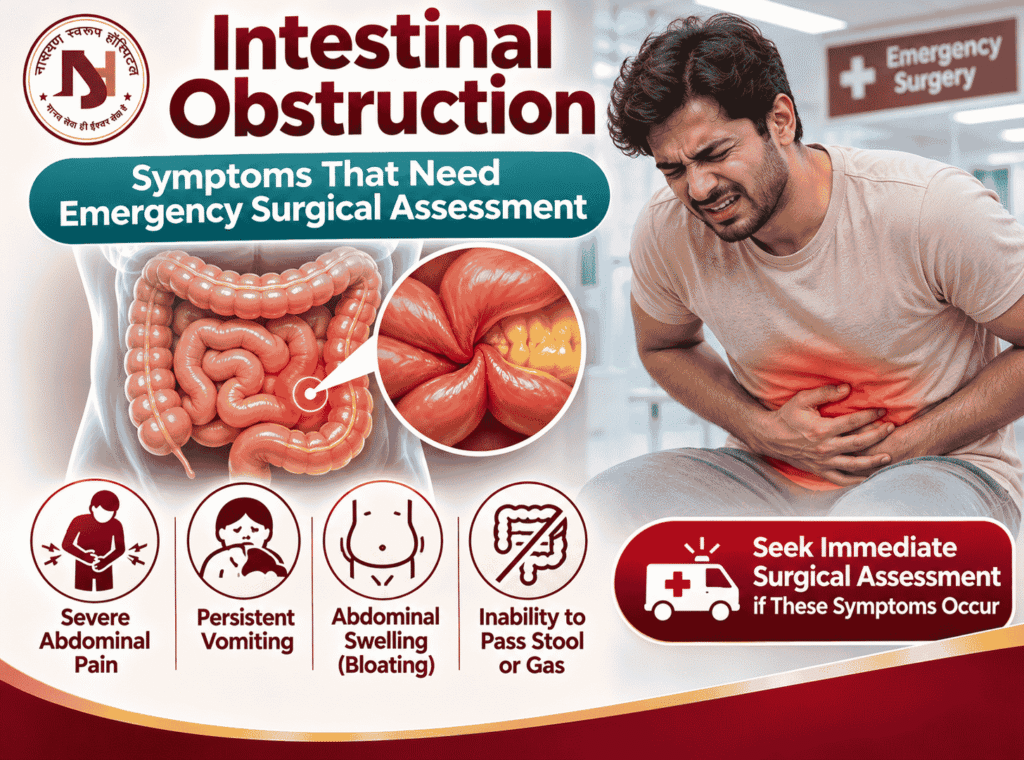
Typical features include cramping abdominal pain, repeated vomiting, increasing abdominal swelling and difficulty passing stool or gas. Pain may come in waves initially, while persistent or severe pain can indicate a more serious process. People can also become dehydrated, weak or dizzy. The symptom pattern changes according to the location and completeness of the obstruction. An older adult or someone taking strong pain medicines may present less typically. Do not rely on a single sign or delay because you have not experienced every symptom on an online checklist.
Why Can a Bowel Become Blocked?
Previous abdominal surgery can leave bands of scar tissue called adhesions, which are a common cause of small-bowel obstruction. A hernia can trap part of the bowel. Tumours, inflammation, twisting of the intestine or severe narrowing may also be involved. The likely cause depends on surgical history, age and associated symptoms. Constipation alone is not the same diagnosis as intestinal obstruction, although severe stool impaction can cause significant problems. Sharing information about earlier operations, hernias and bowel diseases helps doctors narrow the possibilities quickly.
What Should You Do if Obstruction Is Suspected?
Seek urgent hospital assessment rather than trying to manage severe symptoms at home. Do not take strong laxatives, enemas or large meals to force the bowel to move unless specifically advised by a doctor. Continued vomiting can lead to fluid and electrolyte loss. If a patient is extremely unwell, fainting or unable to keep fluids down, emergency transport may be appropriate. Take a list of medicines, allergies, previous operations and when symptoms began. The time course matters because it can show whether the situation is rapidly worsening.
How Is the Diagnosis Investigated?
Doctors check vital signs, hydration, abdominal swelling and tenderness. They ask whether vomiting is ongoing and when the patient last passed stool or gas. Blood tests can help assess dehydration, kidney function, inflammation and other abnormalities. Imaging, often a CT scan depending on the circumstances, can identify where the bowel is blocked and look for complications. Sometimes other tests are needed. The decision is made clinically, and imaging should not delay urgent treatment when the person is unstable. Self-interpreting a scan report without the examination can be misleading.
Does Every Obstruction Require an Operation?
No. Some uncomplicated obstructions may resolve with hospital observation, intravenous fluids, relief of stomach pressure through a nasogastric tube and careful monitoring. Other patients require emergency surgery, particularly if there is a trapped hernia, suspected loss of bowel blood supply, perforation or deterioration. A clinician decides whether non-operative management is safe based on examination, imaging and progress. Laparoscopic surgery may be possible in selected cases, while open surgery can be safer in others. The priority is restoring bowel function and preventing complications, not selecting a technique based on scar size.
What Are the Warning Signs of Bowel Injury?
Severe constant pain, a rigid or extremely tender abdomen, fever, rapid heartbeat, shock or worsening blood tests can raise concern for complications. Vomiting with inability to pass gas and progressive distension should not be ignored. These findings do not always identify the exact problem, but they support urgent hospital assessment. Delay can increase the risk of dehydration, poor blood supply to the bowel and serious infection. Never assume that temporary pain relief means a blockage has resolved. A clinician may need repeated examinations to judge the trend.
What Happens After Treatment?
Recovery depends on the cause, whether surgery was required and the condition of the bowel. The team gradually assesses the return of bowel function, hydration and ability to tolerate food. People who undergo an operation may need wound care, mobility support and follow-up. A patient with an adhesion-related blockage may be advised about recurrence symptoms, although there is no guaranteed prevention method. A hernia-related blockage may require discussion of hernia care. Ask the hospital team which symptoms would require coming back urgently after discharge.
What Should Families Tell the Emergency Team?
If someone is in severe pain, a family member can help by providing the surgical history, medication list and timing of vomiting or bowel changes. Mention a known hernia, previous cancer treatment or earlier bowel obstruction. Explain whether the patient has been eating and drinking and whether urine output has decreased. Avoid offering food, laxatives or remedies while awaiting assessment unless the treating clinician approves. Clear information supports decision-making, but do not let paperwork or gathering reports delay emergency transport.
Surgical Assessment in Prayagraj
Narayan Swaroop Hospital lists Dr. Rajeev Singh as an advanced laparoscopic surgeon. Its general surgery page provides service information. A separate article discusses when laparoscopy may be considered for hernia and intestinal obstruction. Suspected obstruction, however, calls for urgent emergency assessment rather than an ordinary appointment.
Frequently Asked Questions
Can you pass stool with a partial obstruction?
Yes, sometimes. Passing a small amount of stool or gas does not reliably exclude a bowel obstruction.
Should I take a laxative if my stomach is swollen?
Do not use a laxative when obstruction is suspected without medical advice. It may be unsafe.
Is laparoscopy always possible in an emergency?
No. The safest approach depends on the cause, bowel condition and patient’s stability.
Conclusion
Intestinal obstruction is a time-sensitive condition that cannot be diagnosed by symptoms alone. Severe pain, repeated vomiting, distension and reduced passage of gas deserve urgent evaluation. Hospital assessment identifies whether monitoring or surgery is necessary and helps prevent dangerous delays.
Our Recent Blogs
- Piles, Fissure and Fistula Treatment in Prayagraj
- Laser Piles Treatment in Prayagraj
- Laparoscopic Hernia and Intestinal Obstruction
Hospital Location: Narayan Swaroop Hospital, Prayagraj on Google Maps
Medical References
Medical editorial disclaimer: General patient education only. A qualified hospital clinician must clinically review the draft before publication. Emergencies require immediate medical care.