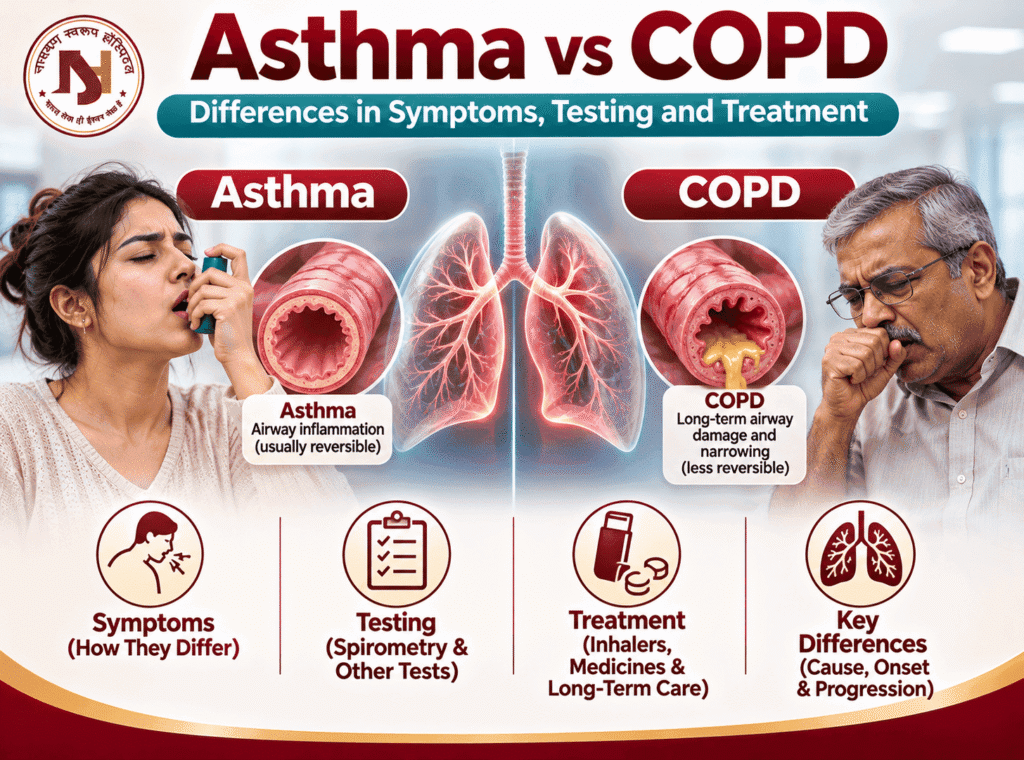

Asthma vs COPD: Differences in Symptoms, Testing and Treatment
Wheezing, coughing and shortness of breath can occur with several lung conditions. Two common diagnoses are asthma and chronic obstructive pulmonary disease, or COPD. Because symptoms overlap, it is easy to assume they require the same medicines or that any long-standing cough is simply a smoker’s cough. Understanding asthma vs COPD symptoms means looking at when breathing problems occur, what triggers them, how lung function changes and what other illnesses may be present. A proper assessment helps avoid treating the wrong condition and supports a safer plan for ongoing respiratory health.
What Happens in Asthma?
Asthma is a chronic condition involving inflammation and variable narrowing of the airways. Symptoms may include wheezing, chest tightness, coughing and breathlessness, sometimes worsening at night or after exercise. Allergens, respiratory infections, smoke or other triggers can contribute to episodes. A person may feel completely well between flare-ups. Some have symptoms throughout the year, while others experience them intermittently. The pattern is informative but not enough for diagnosis. A clinician may use breathing tests and a treatment response to help understand what is happening in the lungs.
What Is COPD?
COPD describes persistent airflow limitation associated with conditions such as emphysema and chronic bronchitis. Smoking is an important risk factor, though other exposures, including occupational dust or smoke, can contribute. Symptoms often develop gradually and may involve a long-standing cough with phlegm, breathlessness during activity and repeated chest infections. It can affect people who have never smoked, so smoking history is not the only consideration. COPD may become worse over time, but diagnosis, prevention of exposure and appropriate treatment can improve symptoms and reduce certain risks.
How Do the Symptoms Compare?
Asthma symptoms often vary from day to day or with triggers, whereas COPD symptoms may be more persistent and progressively limiting. However, these descriptions are tendencies, not absolute rules. Some people with asthma have ongoing symptoms, and those with COPD experience flare-ups. Wheezing can occur in either condition or in other illnesses. Breathlessness can also come from heart disease or anaemia. The clinician asks about onset, smoking and exposure history, triggers, nighttime symptoms, sputum and exercise tolerance before deciding what to investigate.
Why Is Spirometry Important?
Spirometry measures how much air a person can exhale and how quickly. The test may be performed before and after an inhaled bronchodilator to assess changes in airflow. Persistent airflow obstruction can support a COPD diagnosis in the right clinical setting, while variability or reversibility may support asthma. Results must be interpreted carefully with age, symptoms and test quality. Do not purchase an inhaler or conclude you have asthma solely because breathing temporarily improves after using one. A physician may recommend additional tests when the result or symptom pattern is unclear.
Are Other Investigations Needed?
Depending on the history, the clinician may request oxygen measurements, chest imaging, allergy-related assessment or blood tests. A chest X-ray can help look for other problems but does not diagnose asthma by itself. Some patients need evaluation for infections, bronchiectasis, heart disease or other causes of breathlessness. The plan is tailored; not everyone requires CT imaging or a large panel of tests. Bring previous lung-function reports and details of inhalers used. Knowing which medicines were taken before spirometry may also matter for interpreting the result.
How Does Treatment Differ?
Asthma management often includes inhaled anti-inflammatory treatment, with reliever therapy and an individual action plan as appropriate. COPD care may involve bronchodilator inhalers, vaccinations, smoking cessation support, pulmonary rehabilitation and selected other medicines. Some patients have overlapping features that require specialist judgement. Taking only a quick-relief inhaler repeatedly without reviewing control may be unsafe. Inhaler technique is also important: a medicine cannot work as intended when the device is used incorrectly. Ask a nurse or clinician to check technique rather than increasing doses independently.
What Is a Flare-Up and When Is It Urgent?
A flare-up means breathing symptoms become noticeably worse than usual. Signs may include greater breathlessness, more coughing, changed sputum or increased need for reliever treatment. Severe difficulty breathing, blue or grey lips, confusion, chest pain or inability to speak comfortably require emergency care. Do not wait until a routine appointment if rescue medicine is not helping or the person looks seriously unwell. Patients with diagnosed lung disease should have an individual written action plan explaining when to adjust treatment and when to seek urgent assessment.
How Can Daily Habits Support Breathing?
Avoiding smoking and second-hand smoke is important for lung health. Reducing exposure to workplace dust, indoor smoke or known asthma triggers can help in selected situations. Regular activity appropriate to breathing ability may improve confidence and fitness; pulmonary rehabilitation can be useful for COPD. Vaccinations and management of associated illnesses should be discussed with the treating clinician. Do not stop exercise entirely because of mild breathlessness without guidance, but do not push through severe symptoms. The safest plan balances activity with monitoring and medical support.
Questions for a Respiratory Consultation
Describe whether symptoms are intermittent or daily, whether they worsen at night and how much exercise you can do. Mention tobacco exposure, occupation, previous infections, family history and every inhaler used. Ask what the spirometry shows, whether the diagnosis is confirmed and how treatment benefit will be reviewed. Request a demonstration of inhaler technique and clear advice on flare-up warning signs. If breathing worsens despite treatment, report it rather than borrowing someone else’s inhaler or buying repeated over-the-counter remedies.
Respiratory Services in Prayagraj
Narayan Swaroop Hospital lists a TB, chest and respiratory medicine department. Its consultants directory can help confirm current appointments. Severe breathlessness or confusion requires emergency assessment rather than a scheduled outpatient visit. For ongoing cough or wheeze, an appropriate clinical assessment can guide testing and treatment.
Frequently Asked Questions
Is wheezing always caused by asthma?
No. Wheezing can occur with COPD and other lung or heart problems.
Can someone have COPD without smoking?
Yes. Occupational and environmental exposures and other factors may contribute.
Can I use someone else’s inhaler?
No. The medicine and dose should match your diagnosis and prescribed plan.
Conclusion
Asthma and COPD share symptoms but differ in important ways. Breathing tests, history and ongoing review help establish the diagnosis and select treatment. Avoid self-prescribed inhalers and seek emergency care for severe breathing problems.
Our Recent Blogs
- Emergency and Critical Care in Prayagraj
- From Emergency to ICU: Hospital Teams
- What Is a Multispeciality Hospital?
Hospital Location: Narayan Swaroop Hospital, Prayagraj on Google Maps
Medical References
Medical editorial disclaimer: General patient education only. A qualified hospital clinician must clinically review the draft before publication. Emergencies require immediate medical care.